


Many people treat browser wallet extensions as simple keystores: a place to sign and send transactions. That framing misses the richer role modern extensions like Rabby play as an active risk filter for multi‑chain DeFi. Rabby’s transaction simulation is not mere convenience; it is an interpreter placed between your intent and the blockchain, translating opaque contract calls into a readable, analyzable sequence and flagging operations that matter for custody and risk management.
This article compares transaction-simulation approaches, explains the mechanisms Rabby uses, clarifies where simulation helps and where it does not, and gives practical heuristics for U.S. users deciding whether to adopt Rabby as their primary extension. It aims to leave you with one sharper mental model (what simulation protects against and what it cannot), one actionable checklist for operational security, and a short view of the signals to monitor in the months ahead.
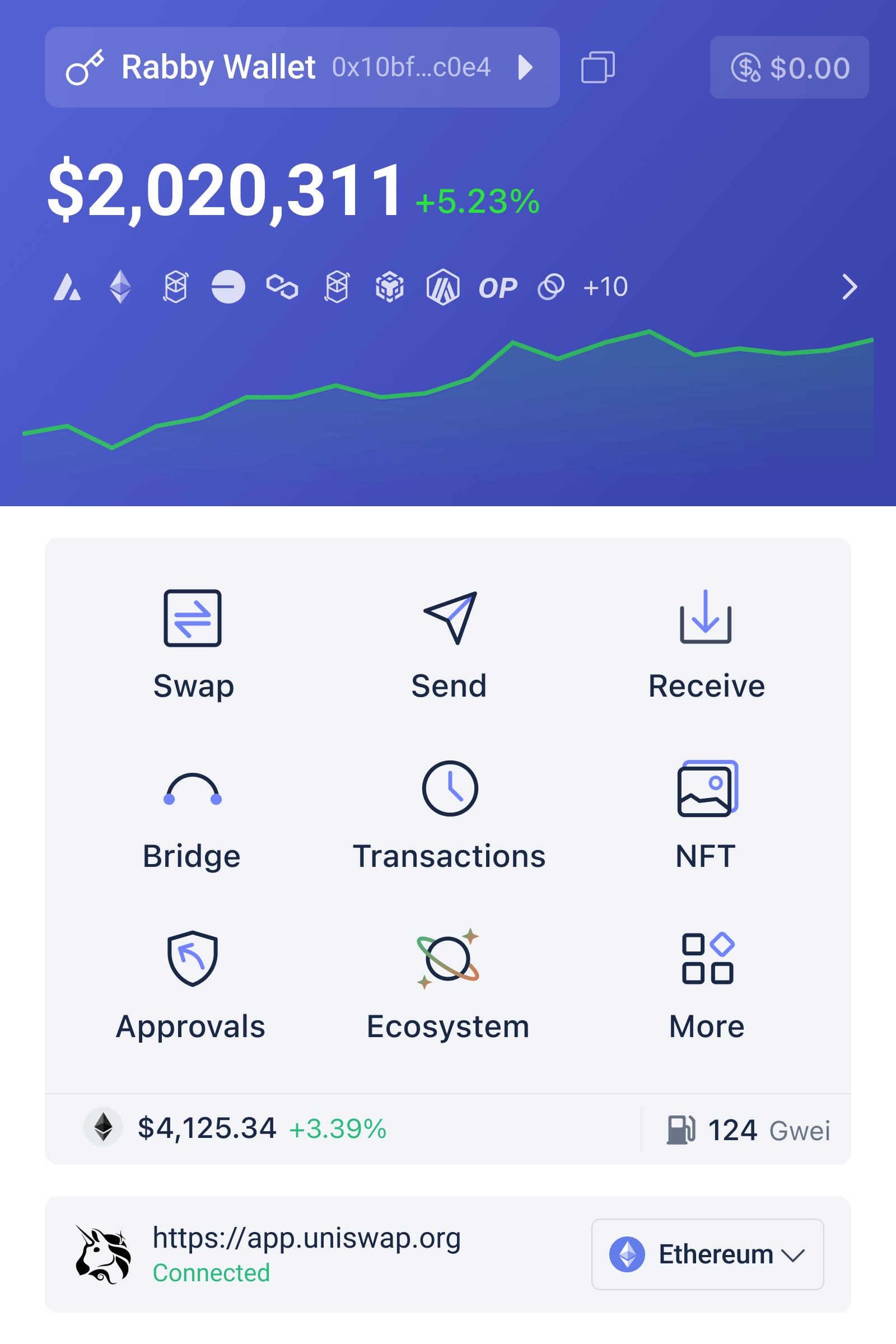
How transaction simulation works in a wallet extension — mechanism, not magic
At base, a transaction simulator runs the candidate transaction(s) through a blockchain node or a local EVM-compatible runtime before you sign. The simulator produces a dry‑run that reveals state changes (token balances, allowance changes, contract calls) and reverts. Rabby integrates such simulation into the signing flow so that users see the effects—including indirect operations such as token approvals, nested contract calls, and value transfers—before authorizing anything.
Mechanically, simulators rely on one of two data sources: a full node or a light/third‑party RPC that supports eth_call with state overrides and tracing. Each approach has trade-offs. A local full node gives maximal fidelity and resistance to man‑in‑the‑middle RPC manipulation, but it is resource‑intensive and impractical for many desktop users. Third‑party RPCs are convenient and fast, but they create an attack surface: a malicious RPC could withhold traces, misreport state, or inject misleading data. Rabby’s design choices therefore matter: the extension must balance fidelity, latency, and trust in the RPC layer.
Simulation is most useful for revealing three classes of problems: unintended approvals (unlimited allowances), multi‑step drain patterns (where approving one contract enables a later transfer by a different contract), and complex cross‑contract interactions that disguise value movements. It is less effective for detecting social‑engineering tricks (phishing pages asking you to paste a seed phrase) or off‑chain agreements that lead to on‑chain risk. In short: simulation inspects the transaction’s on‑chain semantics; it does not secure your secrets or stop someone from tricking you into signing a dangerous message outside the simulation flow.
Side‑by‑side: Rabby’s approach versus two common alternatives
Compare three common user configurations: (A) a minimalist key-only extension with no simulation, (B) an extension that uses lightweight simulation via a single third‑party RPC and minimal UI, and (C) Rabby’s approach which combines simulation with explicit approval controls and attention to usability for multi‑chain DeFi. The trade-offs map to real decision points for U.S. users who interact with many chains and dApps.
Security surface: A has the smallest codebase but the largest practical risk because users receive no machine‑level translation; they must read raw transaction data. B provides useful information but inherits the trust assumptions and potential data poisoning from a single RPC. C aims to reduce both cognitive load and RPC trust by offering clearer risk summaries (e.g., “infinite approval” flags) and UI affordances to create granular allowances; however, it still depends on the correctness and honesty of the RPC/tracing layer unless paired with a local node.
Usability and risk reduction: A favors simplicity but shifts interpretation burden to the user. B helps, but poor UI or incomplete simulation can lull users into false confidence. C improves decision quality by surfacing the right questions (What token is being approved? What contracts will receive control? Is there a value transfer to an unknown address?) and by enabling safer defaults such as limited allowances and pre‑simulation before signing. Rabby’s simulation is therefore a design choice to reduce human error by translating machine state into human cues.
Operational cost and maintenance: Running a full node (ideal for maximal integrity) has nontrivial hardware and maintenance costs, which few end users accept. Relying on third‑party RPCs lowers the barrier but increases systemic risk if those services are targeted. Rabby must navigate this constraint; its effectiveness therefore depends on how it selects and verifies RPC providers and how it presents residual uncertainty to users.
Where simulation helps — and where it breaks
Simulation is powerful for a narrow but high‑value set of protections. It reduces accidental unlimited approvals, warns about unexpected token transfers, and exposes reverts or failing steps that could waste gas. It also helps advanced users compose multi‑call transactions safely by revealing intermediate state transitions.
Limits and failure modes: simulation cannot detect private‑key compromise, social‑engineering, or malicious browser extensions that manipulate the UI after simulation but before signing. It also may be blind to on‑chain race conditions and front‑running that change outcomes between simulation and the actual mined transaction. Finally, if the underlying RPC is lying (by omission or tampering), simulation output can be misleading. These are not theoretical concerns — they are practical boundaries you must accept when relying on simulated dry‑runs.
Regulatory and regional considerations: in the U.S., users and institutions increasingly expect auditable decision paths. A simulator’s trace provides an evidentiary trail for why a user authorized a transaction. That can help with internal compliance or fraud investigation. But relying on simulation as a control requires documenting its limits in standard operating procedures: simulation reduces certain technical risks but is not a compliance panacea for custody or fraud.
Decision framework: when to use Rabby, when to supplement it
Here is a compact heuristic for different user profiles:
– Casual DeFi user (small balances, occasional swaps): Rabby’s simulation plus conservative defaults (limit approvals, use reputable dApps) is a strong net improvement over key‑only extensions. The convenience and risk flags are practically useful.
– Active trader or liquidity provider (frequent, complex transactions): use Rabby for pre‑sign simulation, but complement it with additional controls: hardware wallet for signing, separate browser profile for DeFi, and occasional verification via an independent node or block explorer to validate simulation outcomes.
– Institutional or custody use (hot wallet at scale): simulation is valuable for alerting, but it must be paired with organizational controls: multi‑sig, transaction batching with human review, independent nodes for simulation, and logging of simulation traces for audit. Do not treat a consumer extension as a sole safeguard.
Practical checklist — what to watch during a Rabby-simulated transaction
Before signing, verify these items that Rabby’s simulation should make visible:
1) Token identity and decimals: check the token contract, not the displayed ticker; scammers reuse tickers. 2) Allowance scope: prefer explicit numeric limits over “infinite” when the dApp doesn’t require recurring permissions. 3) Destination contracts and nested calls: confirm which contracts will act on your funds and whether a different contract can later withdraw. 4) Value and gas exposure: ensure the gas and value match your intent; be wary of high gas estimates on otherwise simple calls. 5) Reverts or conditional steps: if simulation shows parts can revert, understand whether the partial state could leave you exposed.
These checks reduce the chance of accidental loss. They do not protect your seed phrase or prevent an attacker who controls your browser from replacing UI elements after simulation. Operational discipline (hardware wallet, isolated browser profile, no seed sharing) remains the essential complement.
What to watch next — conditional signals, not predictions
Which developments would change how much you should rely on a simulator like Rabby? Watch these signals:
– Broader adoption of local or light‑client simulation APIs that reduce dependence on third‑party RPCs. If these become standard, simulation fidelity will increase. – Improvements in UI design standards for approvals (industry standards or browser‑level prompts) that make allowances and contract identities more explicit; these would lower cognitive error. – Any reported incident where an RPC provider manipulated or withheld trace data; that would expose the current dependency risk and push the market toward node decentralization or cryptographic proofs of state.
Each signal points to a mechanism: lower RPC trust increases simulation integrity; better UI reduces human error; RPC manipulation highlights systemic dependency. Monitor these, and adjust your operational choices accordingly.
FAQ
Does Rabby’s simulation protect me from phishing or a compromised computer?
No. Simulation inspects the proposed on‑chain effects of a transaction but cannot verify the security of your environment. If a webpage tricks you into signing a transaction, simulation only helps if you inspect the simulation output and refuse malicious transactions. For device‑level compromise, the only reliable defenses are hardware wallets, isolated environments, and strict operational procedures.
How trustworthy are simulations that use third‑party RPCs?
They are useful but not trustless. Third‑party RPCs can be fast and featureful, but they introduce a data‑integrity dependency. A prudent posture is to treat simulation output as a decision aid, not definitive proof, and to demand transparency about the RPC used. For high‑value operations, consider independent verification via a different RPC or an independently run node.
Will simulation stop unlimited-approval attacks entirely?
Simulation reduces accidental unlimited approvals by flagging them and enabling limited allowances, but it does not prevent a dApp from requesting an unlimited approval. The user (or policy) must reject or limit that approval. Simulation shifts the battle from invisible mechanics to a clearer conscious choice—useful, but not complete.
Where can I download Rabby safely for a U.S. desktop user?
You can review the extension and official materials via the project’s archived distribution document here: rabby wallet. Always verify the extension’s publisher in the browser store and prefer downloads from official sources to reduce supply‑chain risk.
Closing thought: think of simulation as an interpreter that makes the blockchain speak in your language. It narrows a critical gap between machine operations and human decisions, but it is one tool in a layered defense. For U.S. users engaging seriously with multi‑chain DeFi, combining Rabby’s simulation with hardware signing, disciplined browser hygiene, and occasional independent verification offers a defensible operational posture that meaningfully lowers—but does not eliminate—custodial and protocol risks.